Storm Watching in Tofino: Frequently Asked Questions

Storm watching in Tofino is one of the best ways to experience Vancouver Island in winter. From November through March, Pacific storms can bring strong winds, heavy rain, and powerful waves to the west coast.
But storm watching also comes with a few questions. When is the best time to go? Where can you safely watch the waves? What should you wear? Can you take kids or dogs?
Here are the most common questions about storm watching in Tofino, along with simple tips to help you enjoy the coast safely.
When is storm watching season in Tofino?
Storm watching season in Tofino runs from November through March. Winter storms bring strong winds, heavy rain, and big waves to Vancouver Island’s west coast. The wildest weather often comes between November and February, though storms can roll in as late as March. If your travel dates are flexible, check the forecast a few days before you go. Even in the middle of winter, you can get a few calm days in a row.
Is storm watching in Tofino dangerous?
Storm watching can be dangerous if you get too close to the ocean.
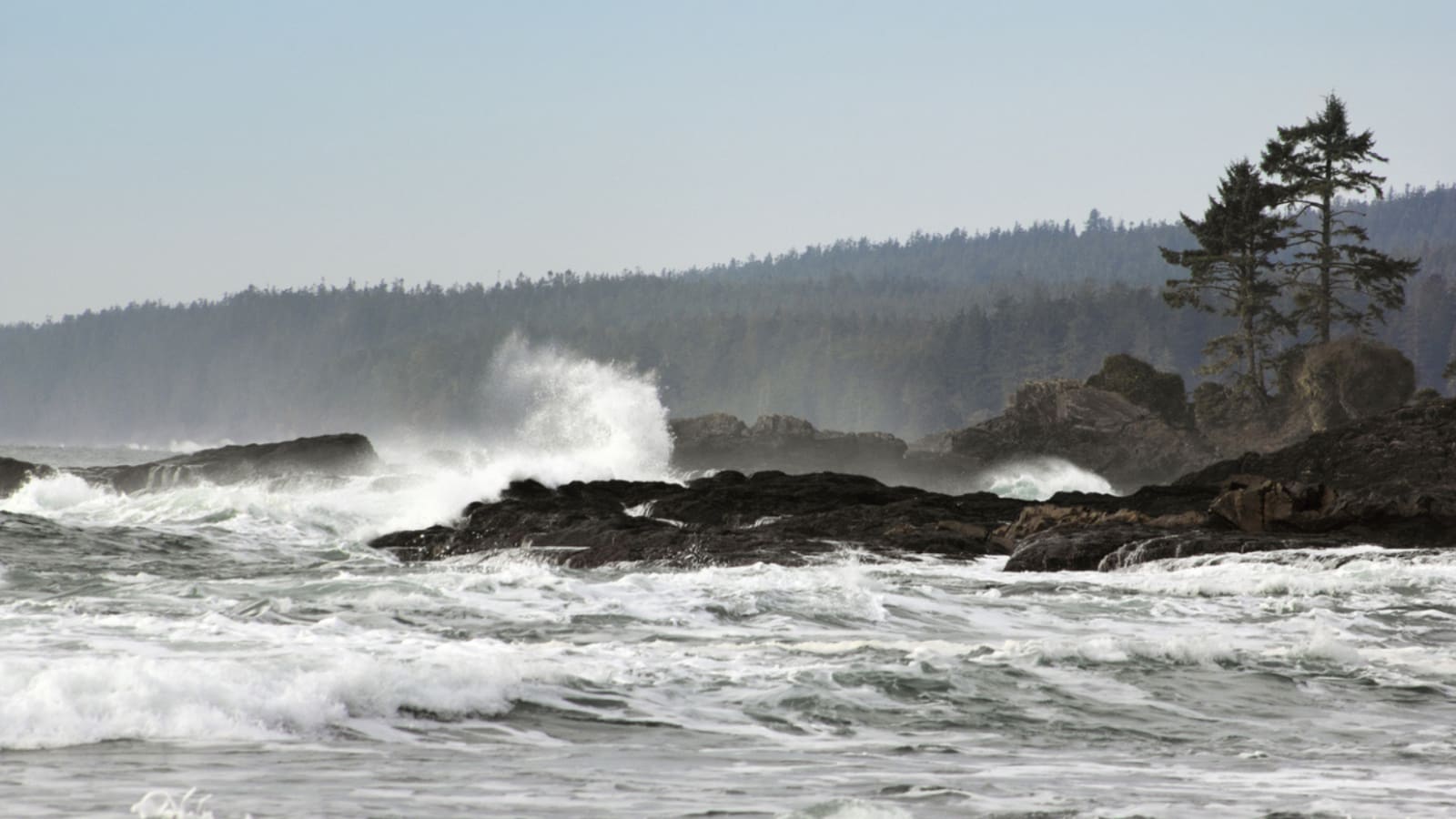
Stay well back from the water, avoid wet rocks and exposed headlands, and never stand on driftwood. Large waves can reach much farther up the beach than expected.
The safest way to storm watch is from a designated viewing area, trail, or another spot well above the water.
What are the best places for storm watching in Tofino?
Some popular spots include Cox Bay, Chesterman Beach, Long Beach, Wickaninnish Beach, and Tonquin Beach.
Cox Bay and Long Beach offer wide-open ocean views, while Chesterman Beach is easy to access. The Kwisitis Visitor Centre area is a good option when you want to view the waves from a safer, more sheltered location. Tonquin Beach is smaller and reached by a forest trail.
Always check conditions before heading onto a beach.

What should you wear for storm watching in Tofino?
Dress for rain, wind, and cold temperatures. A waterproof rain jacket and pants, warm layers, and waterproof boots are the most important items.
It is also worth bringing gloves, a hat, warm socks, and an extra change of dry clothes. Skip the umbrella during strong winds—a good rain jacket works much better.
Can you walk on the beach during a storm?
Only when conditions are safe. Light rain and calmer weather can be great for a beach walk, but strong winds, large waves, or high tides can make the beach dangerous.
Before you go, check the tide, waves, wind, beach access, and your route back. If conditions look rough, watch from a safe distance instead.
What are king tides, and are they safe for storm watching?
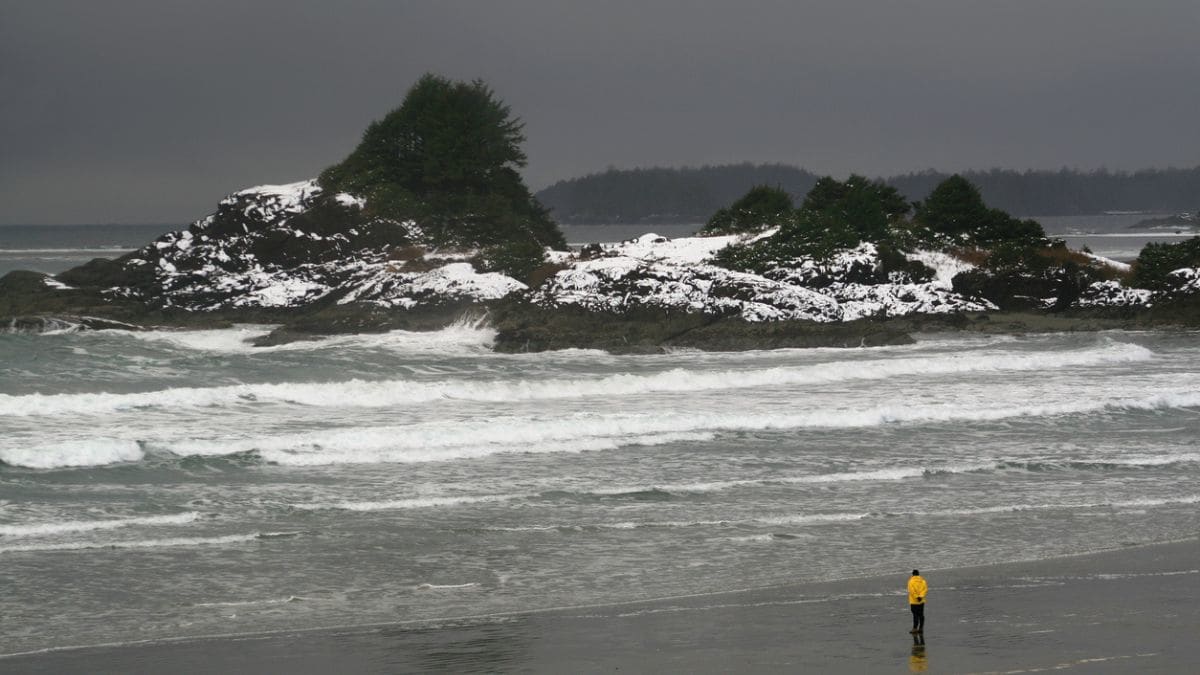
King tides are unusually high tides that can occur around the full or new moon. When combined with stormy weather, they can push water much farther up the beach and make some areas unsafe.
If you are visiting during a king tide, choose a raised viewing area and avoid walking close to the water.
What is the best time of day for storm watching in Tofino?
The best time depends on the tide, weather, and daylight.
Daytime is best for exploring safely, especially during winter when daylight hours are short.
Low tide usually gives you more space for a beach walk, while high tide can create dramatic waves—but only watch from a safe, elevated location. Avoid walking beaches in the dark during storm season.
Can you storm watch in Tofino with kids?
Yes, but choose your viewing spot carefully. Keep children close and away from the waterline, especially during rough weather.
Viewing areas, short beach visits during calmer conditions, and indoor ocean views are better options for families. Bring warm clothes, snacks, and extra dry clothing.
Can you storm watch in Tofino with dogs?
Yes, but check the rules for the beach you plan to visit. Some beaches have leash requirements or seasonal restrictions.
During storms, keep dogs on a leash and well away from the surf. Waves, driftwood, and fast-moving water can be dangerous for them too. A towel and dry blanket for the car are useful after a wet walk.
How many days do you need for storm watching in Tofino?
Two to three days is a good amount of time. Storms are unpredictable, so staying for at least two nights gives you a better chance of seeing changing conditions.
You may get a mix of dramatic storms, calmer periods, and time to explore beaches and trails between weather systems.
What else can you do in Tofino during storm season?
Storm watching does not have to be the only activity on your trip.
There is plenty to do between storms. You can walk rainforest trails, explore beaches, visit local cafes and shops, enjoy seafood, or spend time in Pacific Rim National Park Reserve.
Winter is a good time to slow down rather than fill every hour of your trip.
Is storm watching better in Tofino or Ucluelet?
Both Tofino and Ucluelet are excellent, but they offer different coastal views. Tofino is known for wide sandy beaches and open ocean views, while Ucluelet has a more rugged coastline with rocky viewpoints and trails.
If you have time, visiting both gives you a chance to experience different sides of Vancouver Island's west coast.

Storm Watching Safety Tips
The west coast can be beautiful during a storm, but the ocean should always be treated with respect.
Stay well back from the water and never stand on driftwood during rough weather. Avoid wet rocks and exposed areas where waves are breaking.
Check the tide before heading out, especially during king tides. Follow beach closures and safety signs, and check conditions before leaving your accommodation.
If the weather becomes too rough, head somewhere warm and dry. You do not need to be outside to enjoy storm watching.
Plan Your Tofino Storm-Watching Trip
Storm watching gives you a completely different way to experience Tofino. The beaches are quieter, the weather is dramatic, and there is something special about watching the Pacific change from a warm and comfortable place.
You do not need perfect weather for a winter trip to Tofino. In fact, the wild weather is often the reason to go.
Just check the forecast and tides, dress for the conditions, and give the ocean plenty of space.